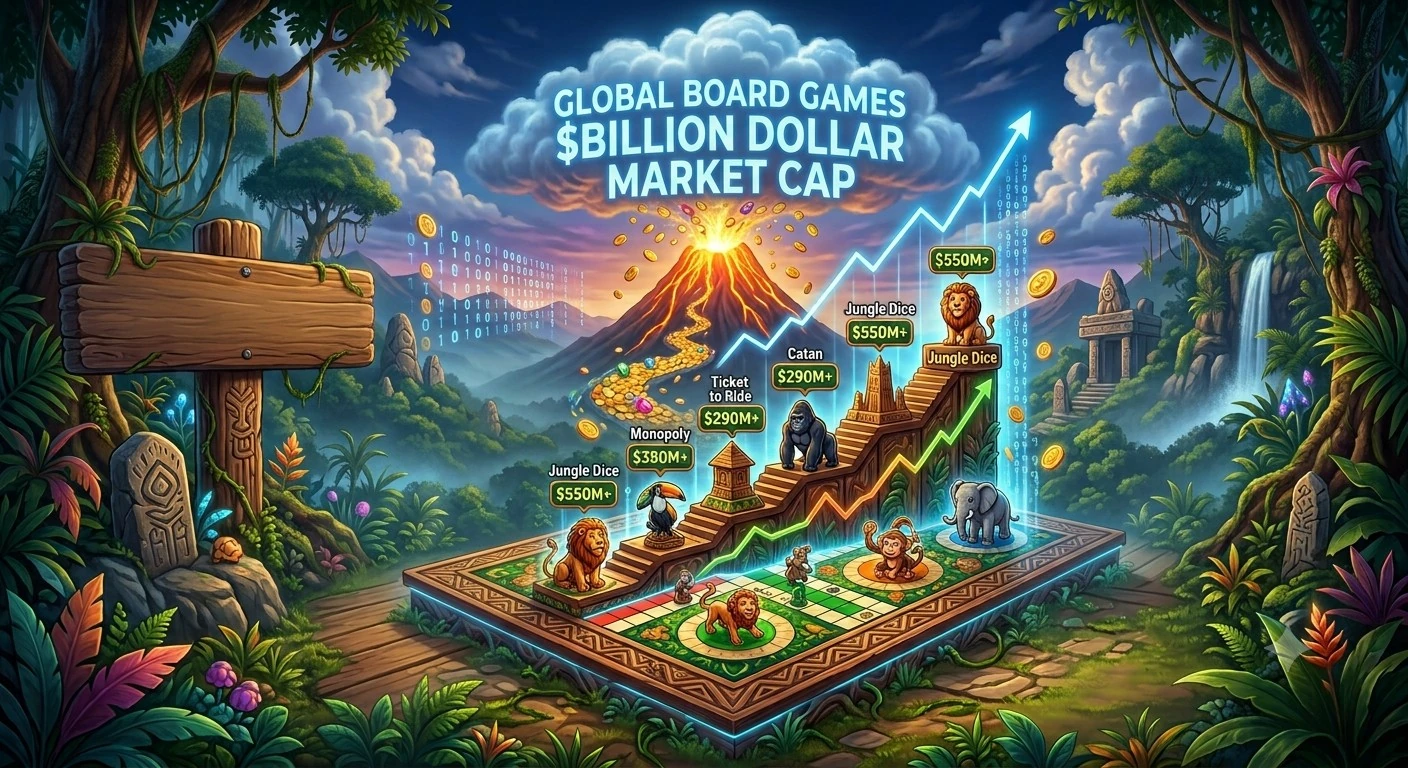
The Billion Dollar Board: Market Cap of Global Board Games
When most people think of the term "esports" or "billion-dollar gaming industry," they immediately picture massive arenas filled with thousands of screaming fans watching professional teams play League of Legends, Counter-Strike, or Dota 2. The traditional narrative is that big money only exists in hardcore PC and console gaming.
However, if you look past the flashing lights of the stadium and examine the actual financial spreadsheets of the mobile gaming sector, a very different picture emerges. Quietly, without the massive marketing budgets of AAA studios, classic digital board games have become absolute juggernauts of revenue. And leading that charge is the humble game of Ludo.
A Multi-Billion Dollar Ecosystem
If you think digital board games are just a niche hobby for casual players, you need to look at the macroeconomic data. The global digital board game market is currently valued in the billions of dollars, and industry analysts project it is growing at a compound annual growth rate (CAGR) of over 15%. This growth rate far outpaces many traditional sectors of the entertainment industry.
How does a simple game generate that much revenue? The secret lies in volume. A blockbuster console game might sell 10 million copies at $70 each. It's a massive influx of cash, but it's a one-time purchase. Ludo operates on an entirely different economic model: the freemium ecosystem.
The Mechanics of Ludo's Dominance
In regions like South Asia, the Middle East, and Latin America, the market cap for Ludo-based applications is staggering. The revenue doesn't come from massive upfront purchases; it comes from millions of tiny, recurring transactions happening every single second of the day.
When a player buys a 99-cent gem pack to enter a high-stakes Jungle Dice tournament, or watches a 15-second advertisement to double their rewards in the Jungle Orchard, they are contributing to this massive financial engine. Because the player base is so unimaginably large (often exceeding 50 million daily active users across the top apps), those fractions of a cent compound into tens of millions of dollars in monthly recurring revenue.
Furthermore, the cost of development and maintenance for a 2D board game is exponentially lower than developing a massive 3D open-world game. This means the profit margins for successful Ludo platforms are incredibly healthy, making them highly attractive to venture capital and institutional investors.
The Future Valuation
As we look to the future, the valuation of the Ludo market is only expected to climb. Why? Because the underlying infrastructure is improving globally. As 5G networks expand into emerging markets and smartphones become even cheaper, the potential user base grows by hundreds of millions of people.
Additionally, platforms like Jungle Dice are innovating on monetization by introducing deep social features like Clan Events and seasonal battle passes. These features ensure that players are constantly engaged and have meaningful reasons to invest in the ecosystem long-term.
As long as developers continue to respect the classic rules while layering on modern competitive features, the billion-dollar digital board game industry shows absolutely no signs of slowing down. The next time you roll the dice, remember: you are participating in one of the most lucrative sectors in all of modern entertainment.
So why wait? Let's get playing Jungle Dice and make some people take notice!
Play a game of Jungle Dice and shock the world!
Play Jungle Dice